Inspiration
Finding Inspiration in Local Cafés: A Sketching Field Guide
There is a particular hour in a neighbourhood café, usually mid-morning on a weekday, when the room seems to exhale. The grinder whirs, someone folds a newspaper into quarters, a man in a paint-flecked jacket works through a second pastry. It is the best free life-drawing studio in town, and hardly anyone uses it. All you need is a seat, a small book, and enough tact to be forgettable.
Pick a seat that does two jobs
The seat matters more than the pencil. You want a spot where you can see a broad slice of the room and where your back isn't the main thing strangers are looking at. A corner table, a stool at the end of the counter, a window bar facing inward: all of these let you glance up without your gaze landing straight on another person's face.
Sit slightly turned. Body toward the sketchbook, eyes free to travel sideways. Square yourself to the room and every glance reads as a stare; sit at ninety degrees to your subject and you effectively disappear. Avoid the table beside the door. You'll spend the session drawing the backs of coats and the same three minutes of foot traffic, and you'll be in everybody's way.
Corner or counter
Corner tables give depth: layered figures, a window, a shelf, a radiator with a coat draped over it. Counter stools give you close-ups, hands, cups, the mechanical rhythm of the bar. Take the corner when you want to draw people. Take the counter on days when you're rusty and need a warm-up that can't walk away.
Read the room before you open the book
Spend the first two minutes doing nothing but looking. Who's working, and where's the path between the kitchen and the tables? Is this a room of regulars reading, or a meeting spot full of loud conversation and people who will notice you? That reconnaissance decides what you sketch, and it is also basic politeness.
Order something, and if you plan to stay past an hour, order again. A café is not a library with better smells; your coffee is the rent. Being a good customer buys you more slack than any amount of apologetic body language.
Drawing strangers in a public room is fine. Making someone feel watched is not. Skip anyone who is upset, mid-argument, on a phone call that clearly matters, or visibly unwell. Skip children entirely. Draw the room around them instead, or wait for the crowd to turn over.
If someone catches you, a small nod and a sketchbook lifted slightly, turned so they can see the page, usually settles it. Most people are pleased, even flattered. Some aren't. Close the book, smile, go back to your coffee. No explanation required, and no wounded feelings on your side either.
Start with what's already holding still
Before you attempt a room full of moving people, draw the things that will not leave. A café table is a still-life setup that someone arranged for you, complete with crumbs, ring stains and a sugar dispenser with a chipped lid.
- The cup and saucer, including the crema line and the drip running down one side
- A sugar dispenser, a salt shaker, and the gap between them
- The napkin holder, the condiment caddy, the stack of menus by the till
- Window frames, condensation, a sill used as a shelf for plants and dead leaves
- Coat hooks and hanging coats, which are honest practice for drawing folds
- The chalkboard menu, for letterforms and the pressure of a tired wrist
- The bar station: grinder, tamper, knock box, three identical rags
None of that sounds glamorous. It doesn't need to. A cup drawn on the table in front of you teaches ellipse control faster than a model who fidgets. And when a person does sit down in your scene, you already own the table they're sitting at.
Interiors in three passes
Block the big shapes first: the window rectangle, the counter line, the dark mass of a shelf. Then place the mid-sized things, chairs, a doorway, a hanging lamp. Save detail for last, the rim of a glass, the shadow under a saucer. If you run out of time after pass one, you still have a drawing that reads as this café and not a generic one.
Candid figures: posture first, faces last
People in cafés are not models, which is the whole advantage. They slump, lean on one elbow, tuck a phone under a chin, cross an ankle over a knee. Those shapes are far more interesting than a face held still on purpose.
Start with the line of the spine and the angle of the shoulders. Add the tilt of the head. Get the hands roughly placed, then leave them as blocks until the end, since hands are the first thing to move and the last thing worth finishing. A figure with a confident silhouette can survive vague hands. The reverse never works.
Work fast and expect interruption
Give yourself ninety seconds per figure. Some people will leave before you finish, and that's fine: the abandoned half-figure at the edge of the page often carries more life than the careful one in the middle. Repeat the same person three times if they sit long enough. The third attempt will be better than the first, and the first will be the one you like.
Faces are optional. A turned head, a profile at a window, or a figure seen from behind is often the kinder and more accurate drawing. You are recording a room, not building a portrait portfolio.
Work with the café's clock, not against it
Light changes while you sit. A window that was flat becomes a bright slab at eleven, and the person in it turns into a silhouette. Notice when that happens and let the drawing follow rather than fighting to keep the tones you started with. Shadow on the table moves; draw the new one and leave the old.
Noise and steam and clatter will interrupt. Treat each interruption as a natural rest, not a failure. Sketch in short bursts: two minutes on the cup, five on the room, ten on the corner where three people overlap. The limits are what keep the drawings loose.
A kit that fits beside a coffee cup
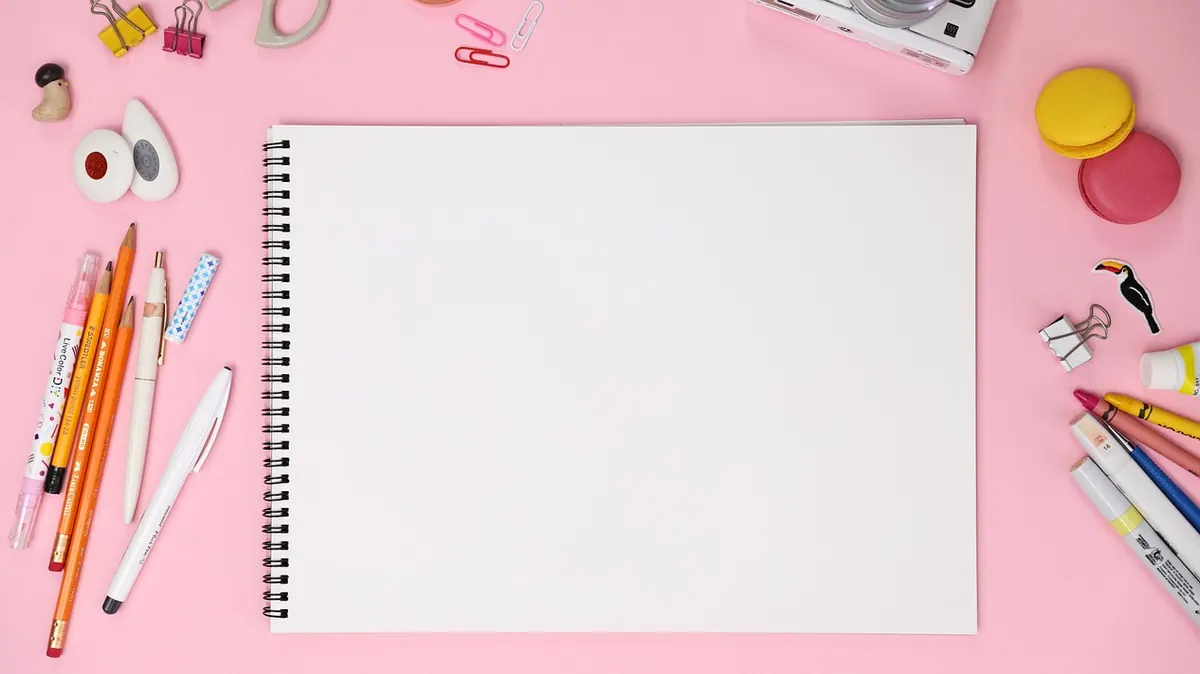
- An A6 or A5 sketchbook with paper heavy enough for light watercolour
- One 2B pencil and a fineliner for the confident lines
- A kneaded eraser, mostly for lifting tone, not for correcting
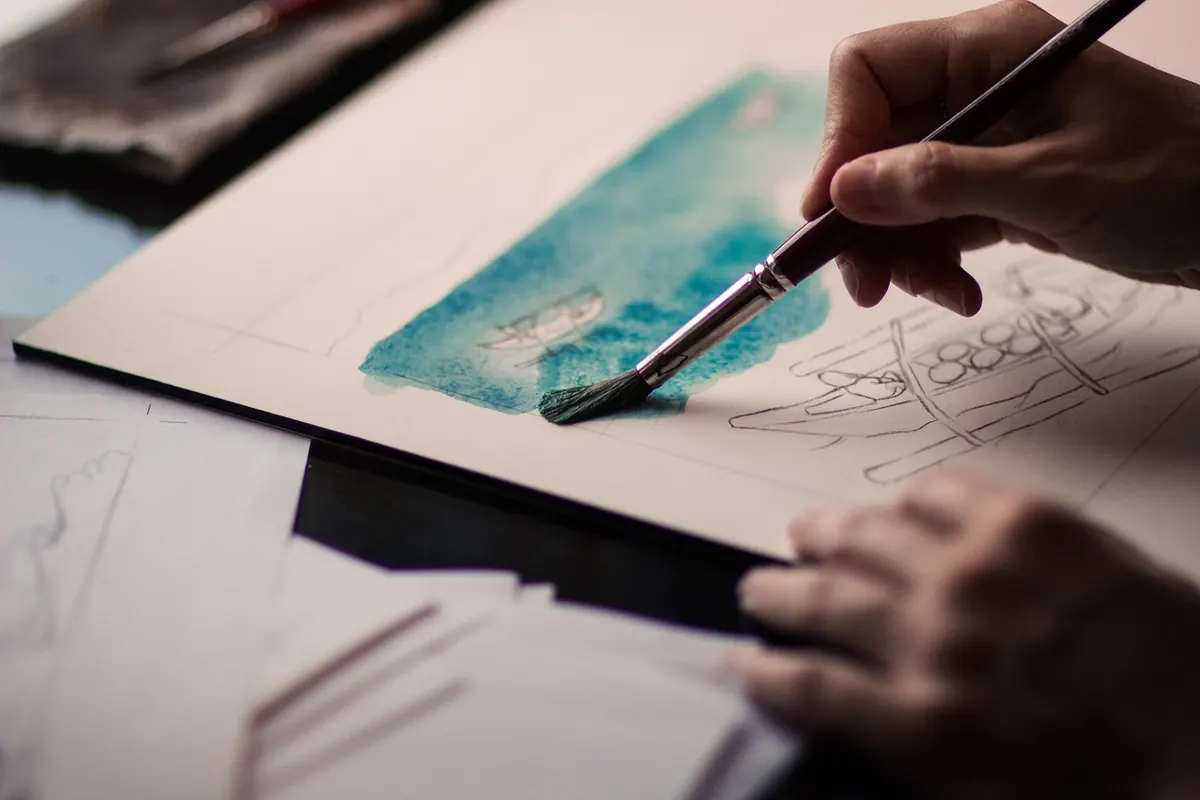
- Optional: a tiny watercolour tin and a water brush, if the table has room
- Order, sit, and look for two minutes without drawing.
- Sketch one table object as a warm-up.
- Block the room in three big shapes.
- Draw one figure for ninety seconds, then another.
- Finish nothing you don't want to finish. Date the page and write the café's name.
Make it a weekly habit, and leave cleanly
The same café at the same hour will teach you more than five new ones. You learn the light, the regulars, the barista's route behind the counter, and your drawings start to show it. Keep a small note of where you've sketched and what the room was like, a line is enough.
When you go, clear your cups to the tray if the café expects it, thank whoever is behind the counter, and leave the table as you found it. Show the staff a page if they ask, because they usually do. That small courtesy is what keeps the seat open for your next visit, and for the next person who walks in with a pencil.
Photo: Antoni Shkraba / Pexels